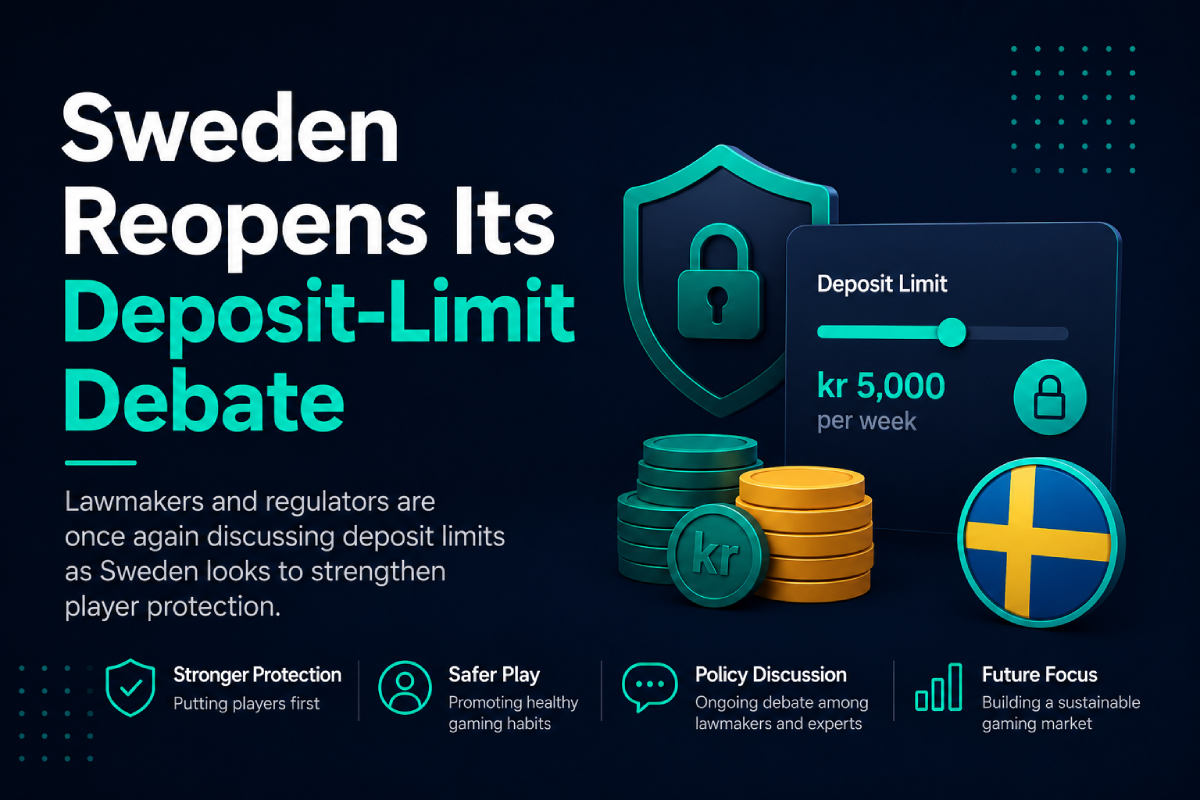
What Spelinspektionen is reviewing
The re-licensed Swedish market has operated since 2019 under a duty of care that obliges every licensed operator to know its customers and step in when spending looks unsustainable. Deposit limits have been part of that architecture from the start: players set their own daily, weekly and monthly ceilings at registration, and can lower them instantly, with any increase held back by a mandatory cooling-off delay. The temporary pandemic-era cap of SEK 5,000 a week on online casino deposits is long gone, but the question it raised, whether the state should impose a hard number rather than leave the ceiling to each player, never fully went away.
According to the framing set out by Spelinspektionen and the government review, the 2026 pass is less about a single headline figure and more about whether the current self-set model is doing enough. The regulator has pointed to data suggesting a small share of accounts still generates a large share of losses, and that some of the heaviest spenders repeatedly raise their own limits the moment the cooling-off window expires. The review is understood to be examining whether limits should be coordinated across operators rather than set site by site, and whether a default or backstop ceiling should apply before a player opts into something higher.
The channelisation problem
Every Swedish gambling debate eventually collides with the same word: channelisation. It is the share of play that stays inside the licensed, taxed, consumer-protected system rather than drifting to unlicensed offshore sites. Sweden built its 2019 reform on a target of keeping that figure high, and the government has repeatedly warned that protections which look strong on paper are worthless if they simply chase players over the border.
This is the tension at the heart of the review. A hard, low deposit cap is the most direct way to limit losses for the players who struggle most. But operators, and some of the regulator's own analysis, argue that the same cap gives determined high spenders a reason to open an account at a site with no Swedish licence, no Spelpaus self-exclusion hook, no duty of care and no tax. Those players then lose the very protections the reform was meant to guarantee. The review has to decide how much channelisation risk a tighter limit is worth, and whether enforcement against unlicensed sites is strong enough to make a stricter rule stick.
What could change
Nothing is settled, and the review attributes its options to consultation rather than a fixed proposal. But the shape of the debate points to a few plausible directions. The table below sets the current rule against the ideas in circulation and the likely effect of each.
| Current rule | Proposal under review | Likely effect |
|---|---|---|
| Player sets own deposit limit at each site | A default backstop ceiling applied before any opt-up | Lower baseline exposure for new and passive accounts |
| Limits set per operator, in isolation | Limits coordinated across all licensed sites | Closes the multi-account workaround; heavier data lift |
| Cooling-off delay on any increase | Longer delay or extra friction for repeat raises | Slows compulsive limit-raising; minor irritation for others |
A coordinated, cross-operator limit is the most consequential of these, because it would close the gap that lets a player spread deposits across several licensed sites to sidestep any single ceiling. It is also the hardest to build, leaning on shared identity infrastructure of the kind Sweden already uses for its Spelpaus self-exclusion register.
What it means for Swedish players
For most players, the honest answer is: probably very little in the near term, and nothing at all until any change clears consultation and is written into law. Self-set deposit limits are already live, and anyone who wants a firm ceiling can set one today and lower it in seconds. That remains the single most effective control available, review or no review.
If a default backstop or a coordinated cross-site limit does land, the group that notices will be the heaviest depositors, exactly as the reform intends. Recreational players who deposit modest amounts are unlikely to bump into a new ceiling at all. The more meaningful shift would be cultural: a move away from treating the limit as a personal preference and towards treating it as a system-wide floor. Our Swedish casino guide and the pages on the market's licensing quirks reflect the rules as they stand, and we will update them if the framework moves.
Our take
The channelisation argument is real, but it is also the argument operators reach for whenever any protection is tightened, so it deserves scrutiny rather than automatic deference. The evidence that a thin slice of accounts drives a heavy slice of losses is consistent across regulated markets, and a self-set limit that a compulsive player can raise the moment a cooling-off window closes is a soft control dressed as a hard one. A default backstop and a longer delay on repeat increases strike us as the sensible middle: real friction for the accounts that need it, barely a ripple for everyone else.
A coordinated cross-site cap is the more ambitious idea, and its success would hinge entirely on enforcement against unlicensed sites, because a strict rule that only bites licensed operators hands offshore competitors a marketing gift. Sweden already has the identity plumbing through Spelpaus, so the tooling is not the obstacle; the political will to police the unlicensed fringe is. We will be watching the consultation closely and testing how any new limit behaves at the cashier once it is live.
FAQ
Is Sweden bringing back a hard deposit cap in 2026?
Not yet. The 2026 work is a review led by Spelinspektionen and the government, not a law. It is examining whether the current self-set deposit-limit model should be tightened, for example with a default backstop ceiling or limits coordinated across licensed sites. Any change would still have to clear consultation before it applied.
Why does channelisation keep coming up in the debate?
Channelisation is the share of play that stays inside the licensed, taxed and consumer-protected system. The core worry is that a cap set too low pushes determined high spenders to unlicensed offshore sites, where there is no Swedish duty of care, no Spelpaus self-exclusion and no tax, so the players lose the very protections the rule was meant to give them.
Can I limit my own deposits right now?
Yes. Every licensed Swedish operator already lets you set daily, weekly and monthly deposit limits at registration, and you can lower them instantly. Any increase is held back by a mandatory cooling-off delay. Setting a firm limit today is the most effective control available, whatever the review eventually decides.